Sunday, March 10, 2013

Here Comes That Rainy Day Feelin' Again

It's a rainy day today - gray skies, everything heavy and dark with the intermittent precipitation.  Days like this always make me turn to a certain kind of music.  A certain kind of mellow, moody, introspective music that matches in sound the way the environment makes me feel.  The right kind of music can enhance a day like today and make it seem steeped in romance and deeper meaning.

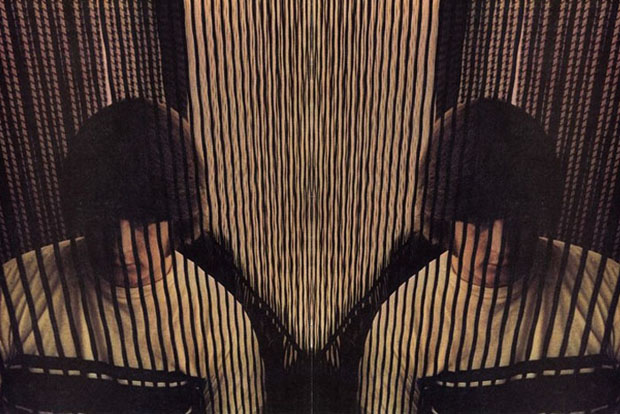
My go-to on rainy, thoughtful days is Nick Drake.  A solemn, sad young man, Drake crafted three perfect albums of autumnal folk pop in the 1970's.  His output was greeted by thunderous silence, and he eventually killed himself.  He was 26.


Over time, his life and work began to enjoy a reappraisal, gradually elevating his status to minor legend and inspiring generations of similar singer-songwriters who have followed in his wake.  The biography of his life holds a fascination for me - misunderstood, moody genius goes unappreciated in his own time, leaving him alone and dejected.  Not unlike Van Gogh, I suppose.  If only a little of that subsequent adoration could have been focused on him during his life - he may still be around today.  Anyway, that's the fantasy.  By all accounts, Drake was moody, bitter, and utterly withdrawn.  That was who he was, and no amount of money or fame would have likely changed that.

His three albums chart an emotional trajectory as well as a musical one.  1969's "Five Leaves Left" was relatively light folk not dissimilar to the output of other such artists of the day, like Neil Young or James Taylor.  1970's "Bryter Layter" took the mold set by "Five Leaves" and darkened it up a bit, while augmenting Drake's spare sound with jazzy accompaniment - much to Drake's ultimate disdain.  1971's "Pink Moon" is the bleakest and sparest of the trilogy - with only Drake and his guitar (and one piano overdub) filling out the album's brief running time.  However, it is no less finely crafted and enjoyable, and in many circles is considered Drake's masterpiece. 

Drake refused to do PR work for the albums, or to perform live to support them.  Hence, they all sold incredibly poorly (under 5,000 copies each).  Drake's label, Island Records, eventually cut off his monthly stipend, and he retreated to his parent's home where he would spend the rest of his life.

Drake's albums, like those of Leonard Cohen, contain a hyper-literary sensibility.  His songs are set apart by some truly wonderful, evocative lyrics.  His soft delivery and deft musicianship drive the power of the lyrics home with gently thundering force.

Lifting the mask from from a local clown
Feeling down like him
Seeing the light in a station bar
And travelling far in sin
Sailing downstairs to the northern line
Watching the shine of the shoes
And hearing the trial of the people there
Who's to care if they lose.
And take a look you may see me on the ground
For I am the parasite of this town.

Dancing a jig in a church with chimes
A sign of the times today
And hearing no bell from a steeple tall
People all in dismay
Falling so far on a silver spoon
Making the moon for fun
And changing a rope for a size too small
People all get hung.
Take a look and see me coming through
For I am the parasite who travels two by two.

From "Parasite" - off of "Pink Moon"

The three albums, while distinctly different from each other, share an unmistakable thread.  And while subsequent artists have mined similar territory and even approached a similar sound - the late Elliott Smith comes to mind - nobody has ever mixed the elements in quite the same way as Nick Drake.  There is no existing footage of him performing live, and while there are numerous excellent covers of his songs (YouTube has seemingly dozens for EACH of his original songs), somehow nothing can satisfactorily capture the magic of Nick Drake like the man himself.  Often imitated, never duplicated, and unsurpassed listening for a rainy day.

Tuesday, February 26, 2013

Homework Movies

I thought people were supposed to get more cultured as they got older.  But it seems the opposite has happened to me.  When I was a teenager I would spend hours sequestered away in my room devouring classic cinema like it was going out of style.  Well, I guess for teenagers in Neosho, MO, it had never really been in style to begin with.  I was a boy alone, and I was happy.

Inspired by several brief encounters (and one quite lengthy afternoon) with an elderly cinema aficionado, I began to track down the works of directors like Bergman, Antonioni, Godard, Truffaut, Kurosawa, etc.  Mostly, I loved the movies I watched.  I at least liked almost all the rest.  Some, I only respected.  But I ALWAYS got something from them.  I viewed them as snowy cinematic peaks ripe for the conquering.  I kept exhaustive lists of ones I had seen and ones I wanted to see.  And the little money I had invariably went to help pay for one VHS or another.  I was young, energetic, mentally curious, and blessed with an abundance of time. 

Now I am old, tired, with a shortage of time.  Now I like big farts, men get balls crushed, lady boobies, exploding, cars, poop. 

My list of world cinema classics to see has become a sort of homework.  These movies I used to so energetically seek out I now approach as I would a root canal.  Every night with clouds in my brain and the sandman blowing logy grains into my eyes, I find it easier and easier to think, "I'll get to that Bunuel tomorrow night.  Tonight, I think "Reno 911: The Movie."  Which actually DID, as it turns out, have all six of the above mentioned criteria for what I now enjoy in a movie.  I've even found myself thinking that most abhorrent of complaints - "Shit got subtitles.  I ain't gonna READ no ding-dong movie...shoot!"

Now that I've realized my tastes have drifted in this direction, it really bothers me.  So much so that, this past weekend, I resolved to knock two movies off my cinematic bucket list - Ingmar Bergman's "The Virgin Spring," and Vittorio De Sica's "Bicycle Thieves."


I started with "The Virgin Spring" because I knew it was the basis for the gritty Wes Craven horror classic "The Last House on the Left," and I recognized elements of the story from other movies as well, including "A Clockwork Orange."  I knew the movie was a relatively brutal and passionate outing for the usually chilly Bergman.  Sounded like a good way to get my feet wet.

As I was watching the movie, it reminded me of what I found so invigorating about such movies when I was a teenager.  International cinema of decades ago was notorious for tackling darker subject matter far more explicitly than anything Hollywood would have dared touch, and "The Virgin Spring" is no exception.  A lovely young woman, the pride and absolute joy of her parents, is sent through the woods to deliver candles to her local church.  Along the way, she is stopped by a swarthy trio of brothers, who attack, rape, and then kill the girl.  The trio later seek shelter (unwittingly) at the home of the girl.  When her father makes the connection, he becomes hell-bent on revenge.

A simple story, the film is rendered harrowing in the hands of a true cinema master.  Shots are perfect, the acting is sublime and naturalistic, and the intellectual conceits heavy and stimulating.  The film contains some of the most haunting, arresting images I've seen in some time.  If it weren't for the fact that Bergman directed so many masterworks, I'm sure "The Virgin Spring" would loom larger in his legend.  As it is, it's a lesser known classic from one of the greatest cinematic voices of all time.


"Bicycle Thieves" is even simpler than "The Virgin Spring."  A down on his luck man barely scraping by with his family in depressed, postwar Italy finally lands a lucky break - a job.  The only catch is he must have a bicycle, and he pawned his to buy food for his family.  His wife pawns the bedsheets so he can get his bike back.  Everything is looking up, but on his first day the bicycle is stolen.  What follows is a long masterpiece of slow burn and steadily escalating desperation.

Life just plain sucks sometimes, and "Bicycle Thieves" is willing to explore that theme and the nuance of how it can whittle away at a person's resolve and sanity over time.  Even though I knew a bit about the movie's story (the title alone gives a major plot point away), I suppose the Hollywood influence in me is what caused me to continually expect some sort of happy turns of luck, or some sort of positive resolution.  But life doesn't always work like that.

Famously cast with non-professional actors, "Bicycle Thieves" greatly benefits from the primal, unstudied acting of its leads.  One's heart breaks for the son as he tries to remain upbeat for his father's sake.  And one can relate to the father even as his increasing desperation makes him less and less pleasant to witness.  While the pessimism of the movie hit me like a bucket of ice water and left me cold, further reflection has caused me to warm significantly.  

I loved "The Virgin Spring," and I enjoyed "Bicycle Thieves."  I respect them both.  More importantly, though, my sleeping affection for world cinema classics has been reawakened.  These movies are not homework, after all, but popular entertainments that have since been elevated to the status of art.  Art with heart, soul, and things to say.  Art that can move me, make me think, and perhaps even make me a better person for having witnessed it.  

Onward and upward - I've put off cracking into my copy of "Seven Samurai" long enough!

Tuesday, February 19, 2013

Forever Changes

 "I'll face each day with a smile - for the time that I've been given's such a little while, and the things that I must do consist of more than style."

The greatest art tends to come from dark places of personal turmoil, distress, and indecision.  Even in myself, I can see the creative urges more clearly, and feel the impact of the resultant work more strongly, when I am depressed, sad, or angry.  When I am happy, my creative output begins to dry up, whether in writing or photography.  Communicating happiness through art can be a beautiful thing, but it so often comes without hunger - without longing - without teeth.  Bob Ross could paint happy little trees all day long, but the cumulative impact of his entire life's work doesn't affect me half as much as one quick perusal of, say, The Scream.

It works the same way with music.  It's the reason why Lesley Gore's "You Don't Own Me" moves me more than "It's My Party."  Why I still feel the urge to rock out to Alanis Morisette's angry, buzzy, "Jagged Little Pill" album, but have long since stopped giving a shit about Jewel.  Why "The Downward Spiral" has knocked me on my ass every time I have ever listened to it.  Why "Sea Change" is my favorite Beck album, and "Odelay" strikes me more as a curio.  The creators channeled some sort of real emotion - anger, betrayal, loss, into amazing works of art.  The pursuit of happiness is almost always more compelling than the real thing.

One of my favorite albums came from a man awash in darkness in what has since been dubbed the "summer of love."  In the spring of 1967, 22-year old musical wunderkind Arthur Lee (frontman of LA psychedelic rock group Love) began composing what he viewed as his final earthly creative output.  In the summer of love he recorded it, and it was released in the fall.  He viewed the album, which would become "Forever Changes," as his final words on matters of life because he had a feeling he would soon be dead.  Not, perhaps, by his own hand, but simply from the weight of being alive in such a crazy world, at such a crazy time.

"Forever Changes" is full of such premonitions of doom.  The album fits soundly into the canon of baroque pop masterpieces released in 1967, but also sounds fresher today than many of its contemporaries in large part because of its unwillingness to pander to the times of its creation.  It is wearier, scarier, and more mysterious.  The music is sparer, less flowery, with orchestrations favoring acoustic guitar and Latin rhythms over Theremin and Mellotron.  The overall picture may be pure psychedelia, but there are no ruminations on incense and peppermints.   Lee crafts catchy, snaky melodies about "upbeat" topics such as nuclear war, aging, and a disintegrating social system.

That all of these things were just over the horizon makes Lee's dark vision seem entirely prescient in hindsight.  Like a musical version of Orwell, Lee's prophecies must have seemed out of place in their time, but history has proven them eerily prophetic.  "Forever Changes" is even more relevant today than it was 45 years ago, and still manages to chill and inspire me in equal measure.

One prophecy that Arthur Lee did not get right was that of his own demise.  He said what he wanted to say - made his peace - but was doomed to live into his 60's.  As the summer of love faded into the winter of discontent that culminated in Altamont, Lee pressed on, disbanding the remaining lineup of Love in favor of an ever rotating group of musicians that supported him throughout the 70's and 80's, eventually discarding the moniker altogether, releasing music instead under his own name.  Various legal troubles led to a prison stint in the 90's, just as interest in Love was beginning to rekindle and Lee was contemplating reuniting with the group's original members.  By the time he got out of prison, two of those members had died, taking the idea of a reunion with them.

In 2002, in celebration of "Forever Changes'" 35th anniversary, a recently released Lee formed a new group and staged shows performing the album in its entirety.  I saw one of the shows on DVD, and it's wonderful and moving to see a much older, wiser Lee revisiting the album.  The songs seem to fit him better as an older man than as a very young one.  And it is always uplifting to see an artist finally being celebrated for something they created well ahead of its time.  One gets the feeling Lee was ready to die in 1967, but knowing that he got to hang around long enough to see a career renaissance is touching.

Lee made music before "Forever Changes," and far more of it after.  But for 43 beautiful minutes, everything about his vision, his band, his compositional talents, and his demons, were in flawless alignment.  We should all be so lucky. 

Sunday, February 17, 2013

An Admirable Life

It's been a while since I've posted anything, and I think a lot about that fact every day.  Topics of interest come and go from my brain, but nothing seems to light the fire under me that makes me sit down and start pouring it out. 

I've wanted to write about uncle Don since dad and I got back from our trip a few weeks ago, but I saw so much in the time I was in Arizona, and it has taken me some time to process it all. 

I had seen uncle Don just a couple of years ago, which I am very grateful for now.  His house was dirty, but it was a perfectly reasonable place for dad and I to be able to spend the night, which we did.  Between that visit and the time he died, it was evident that his health had deteriorated, and along with it his quality of life. 

So I feel sad thinking about that, but mostly just thoughtful.  As he got older, it seems that his routine got smaller and smaller, finally becoming a daily visit to the restaurant down the street from his house for morning coffee, and then returning home to settle in for a long day of watching the Diamondbacks on tv.  I know there was more than that, but it couldn't have been much.

The idea of that depresses me and makes my heart ache for him, but it kicks my brain into overdrive thinking about it, because he didn't seem to mind it.  When I last saw him, he seemed as mentally active as ever, and not at all bummed out or depressed.  He lived the way he wanted to live, and I believe that freedom made him happy.

It's a noble thing to proclaim "no regrets," but it's mostly impossible.  I'm sure Don had his fair share, but he seemed to be a man who could come to terms with truths better than the average person.  Dad always said Don had a scientific mind, and it's certainly true.  He made decisions based on great reflection and weighing of rational thought and quantifiable evidence.  He could be stubborn, but that word implies that he was face to face with truth, and chose to disregard it.  He was a man who decided his own truth rather than have it decided for him.  He bought in to no belief system that I could tell beyond the one he had spent a lifetime refining based on his own studies and experiences.  He bucked societal norms that he considered outdated and allowed himself the freedom to truly explore his mind and his place within the world.

However solitary his life may have been, it was not one devoid of creativity and beauty.  A source of great pride amongst our family, my uncle Don's paintings and drawings were professional quality; indeed, he dedicated a period of his life to art and the act of creating it.  And I learned of other interests during my time rummaging through his possessions - he collected guns, he enjoyed music (and may have even played banjo), and he even enjoyed video games.  He had a taste for Kurt Vonnegut, and had amassed an entire workshop to craft and repair machines and electronics.  His time as a prospector had yielded dozens of interesting and valuable arrowheads, gems, and bits of pottery.

I also learned a lot about my family while I was in Arizona.  Uncle Don (and before and along with him, my grandma) kept everything that anyone ever sent to them.  I hastily collected anything I could find with a name I recognized, so those items could be returned to the senders.  There were exactly three items from me - each announcing a graduation from one institution or another.  My sister, Heather, had sent numerous letters and pieces of artwork to Don throughout the years.  I was touched that she had such a correspondence with him, but it made me feel sad that I had not tried harder throughout the years to keep in touch.  He would have written me back.  He always did.  The last check he ever wrote was to my dad for Christmas - a small amount of money to divide amongst the family.

He was a good man.  He was also a moral man, and steadfast in his beliefs.  He evinced a hard facade, but finding so many years worth of sentimental items collected and carefully stored showed me a welcome glimpse of the soft-hearted man inside.  I didn't know how much I needed to see it until it was there in front of me.

Time catches up to all of us in the end, and uncle Don was no exception.  And once it catches up, it keeps right on moving by.  We buried him at the foot of his mother's grave, in a cemetery overlooking the land on which he had lived most of his life.  There is no marker over him save for a large quartz I found outside his house - almost certainly a find on one of his expeditions.  It seemed like a particularly inauspicious way to go out, but it also seems fitting - uncle Don was never much for fanfare.

So there it is.  I confess that, before his death, I thought about him rarely.  But since his death and my time spent in Arizona, I think about him every day.  Not just wondering what his last few days were like, although that is certainly part of it (and the expected "maybe if I had been there I could have helped him" thoughts), but also reflecting on a life spent alone.  There were daily acquaintances, and everyone in his small town "knew" him, but at the end of the day he had only himself to answer to.  There's a certain stark beauty in that.  A certain kind of purity.  And it was evident that the life he led was full of the things that were important to him, including family and friends, although we all lived so far away.

He has left me more than stories; more than images.  Since his death, I feel in a way I just didn't before.  Emotions and memories, sure, but also a kind of clarity.  A kind of intrinsic comprehension linked by blood.  It's almost as if he has become part of me.  I don't know how to describe it any better than that.  There was a great commonality between us that only became apparent to me after his death and my uncovering so much history in his house, and in his town. 

I regret it took me so long to realize it, but I know now I was always meant to.  Time catches up to all of us - sooner or later.

Saturday, January 26, 2013

Present Tense Memory

Dad and I made it to Springerville today.  It's beautiful here, in a breathtakingly rugged way.  The last time I was here, I remember feeling like the whole community bordered on the depressing, and was ready to leave.  For some reason, this time I feel like I love it all the way down to my bones.  It's cold here today, and it's been raining of and on all day.  And yet, the mountains...the clear sky...it's all so beautiful.

I don't know why I never saw it before.

The business we have been here to attend to has gone smoothly thus far.  Uncle Don's house is a treasure chest of unimaginable family history discoveries.  He was a collector, and didn't throw many things away, but even in the few hours dad and I were there today I was able to uncover so many priceless artifacts.  Amongst these are dozens of previously unseen (by me) photos of family from decades past, including the clearest pictures I have ever seen of my dad's parents when they were young.  In fact, I had only seen one photo of my grandpa prior to today - a medium distance shot where his face was mostly obscured by shadow thrown from a large hat.  Today, I found a full-face studio portrait of him taken sometime during his twenties.  It's small, but it's clear as a bell.  There's the man - full face, straight on, clear as day.  It's breathtaking.  It would mean so little to anyone else, but it means everything to me.

Adventure continues - discovery yet to come fills my heart with anticipation.  Being here in the cradle of my lineage is staggering.  Across the street from our motel is the school my dad went to 7th grade in.  That would have been over 60 years ago.  A child called Bobby ran into that building every day with (most likely) a twinkle in his eye and an ornery grin on his face.  This whole little town is FILLED with those stories, from family members I met, and some that only exist to me through stories - and now some precious pictures.

It's an interesting phenomenon how age bestows upon us a certain amount of myth.  The things we do today without a second thought could carry tremendous amounts of weight and import with following generations.  My dad grew up here.  He just did what we all do.  But something about that fact is AMAZING to me now.  There's a house behind Uncle Don's house that dad grew up in as a kid.  He had to live somewhere, you know?  But the fact that he lived there is AMAZING to me.  I will bring Joanna back here and show her that house and say, "HE LIVED HERE!  AND GRANDMA DID, TOO!!!  AND THEY WERE ALL SO YOUNG!!!!!"  Well, it's a house, and he lived in it.  But he also ATE CEREAL and DREW PICTURES and SANG SONGS there.  Don't you see?!?

It's an amazing thing.  It makes me want to take my current days more seriously, as you never know who will come back to the area where I live in 60 years, and say, "Mark lived HERE, and he ATE food here, and he had SUCH A COOL TV!"  And they'll look at me and say, "You really did?"  And I'll say, "Well, yeah, and I even listened to music on huge speakers."

"Wow..." 

Friday, January 25, 2013

Somewhere Out There

The West looms large in my personal and genealogical history.  I've been west many times, but never been farther east than the western-most part of Illinois.  I know there's a whole world that lies to the east, but my entire life experience thus far has revolved around the wide-open spaces of the west.  The sweeping vistas, the lonesome mountains forever in the distance. 

The little town of Springerville, AZ.

My dad's hometown, and the lifelong (with a few short exceptions) residence of my Uncle Don.  A resilient, wise loner, Uncle Don recently passed away, and Dad and I are on our way west to the little hamlet in the sky (altitude - 7,000 feet) to see to caring for some final arrangements, and to secure Don's house and remove items of extreme sentimental and/or practical value.

It's not a fun reason to be here, but there is still magic in the west that cannot be denied. 

The best place names passed today include Roman Nose, Oklahoma, Corn, Oklahoma, and Zuzax, New Mexico.  Somewhere in Texas we passed a truck stop called (I'm not kidding) Jesus Christ is the Savior Not a Swear Word Truck Stop.  That was fun.

I'm spoiled to majestic views after living in Eureka Springs for the last year - there's something truly breathtaking about endless vistas filled with trees - living things, versus endless vistas filled with dirt and rocks.  Big rocks, for sure, but still rocks.  But there's something liberating about the space.  And the dry air.  And the moderate winter temperatures. 

And the history.

The passing of Uncle Don likely marks the end of my connection to Springerville, AZ.  At least, the last living connection.  But some connections are far deeper - some connections are intangible.  They consist of the fibers of memory and the love that lingers in the heart.  I'm glad I got to see Uncle Don not too awful long ago (about two years) and I'm glad I have a reason to return to the rural mountain region of Northeastern Arizona.

As I've gotten older and experienced travels I've learned how small the country really is.  This morning, I was in Joplin, MO.  This evening I'm in Albuquerque, NM.  Tomorrow I'll be in Springerville.  The country is small, but our own lives - our tiny little worlds - are smaller still.  Like I said, the situation isn't particularly happy, but it is nice to get back out on the road (with shorter notice than I've ever experienced a similar trip before) and revisit these parts of the story of my life.

Perhaps Uncle Don's world was the smallest of all, but by visiting it and taking memories and stories away with me, I make it larger.  And by telling the stories - keeping them alive - I make it eternal.

Friday, January 18, 2013

Beautiful Bummer


"I'm a leaf on a windy day...pretty soon I'll be blown away."


Nobody has ever been able to express sadness quite as beautifully as Brian Wilson.  There are a handful of songs in the world that can grab my heart and move me to tears almost every time I hear them.  90% of those were written by Wilson.

In the world of Brian Wilson, life is a long, drawn out series of reflections on past glories and the knowledge that one only grows older, eventually to come to the end of the road.  One gets the feeling Wilson has been resigned to his end of the road for decades, and the fact that he's still around probably comes as a shock to him as much as anyone else.

His best work - the work that resonates most deeply with me - is the work in which one can feel the lid being lifted off the great, deep well of his mind and heart, and the darkness inside being given room to breathe.  Early Beach Boys tunes like "In My Room," "The Lonely Sea," and "The Warmth of the Sun" hint at this melancholy beautifully, while retaining the mask of candy corn artifice that made the group such a smash in the Kennedy era.

Brian was young when he wrote those songs.  Really young.  One gets the feeling that he was born sad.  As he matured, the themes only got darker.  "'Til I Die" is perhaps the quintessential Brian Wilson bummer song - dark, sad, and yet somehow tremendously uplifting in its sheer beauty.  Something about the sad message coupled with the beautiful delivery, fueled by the fathomless genius of the man, is positively harrowing.  Any message, powerfully told, becomes more effective.

Brian's bio - the drugs, the mental illness, the long stretch of isolation and obesity - destroys me when I think that all it could have taken would have been a little more patience, a little more understanding, at very formative years in his life, to keep him on the right track.  That's another part of his genius - he makes me feel like I could have had something to offer him were I to have been that one to reach out in the darkness.  It's the same way I feel about Michael Jackson, who once said he would walk around his neighborhood at night so lonely, hoping to run into someone he could talk to.  That person totally could have been me!  I could have saved him!

And yet, in the end, I suppose nobody can really save us from ourselves.

I love that Brian's bio took a turn for the brighter as time went on.  As he exorcised ghosts from his past - "Pet Sounds" performed live, finishing and performing "SMiLE" (one of my top 5 albums of all time), one can feel the weight slipping off of him, even if the darkness stayed firmly in place.

His new works - that is, his works created exclusively after the catharsis of the SMiLE resurrection, are vibrant, playful, and full of that same sweet melancholy.  Whether original material or covers of Gershwin and Disney tunes, Brian's beautiful sound - the sound of a thousand voices joined in harmony; the sound of an eternal "teenage symphony to God" - is alive and well, and beautiful to behold.

The Beach Boys reunited for their 50th anniversary, and convened to record and release an album.  Against the weight of tremendous potential for failure, the album fits perfectly within the oeuvre, the world, of Brian Wilson.  The last half of the album is where he gets personal, culminating in the beautiful bummer "Summer's Gone."

Another summer gone...

Summer's gone
It's finally sinking in
One day begins
Another ends
I live them all and back again

Summer's gone
I'm gonna sit and watch the waves
We laugh, we cry
We live then die
And dream about our yesterday

The track begins and ends with piano (eerily reflective of "Wouldn't It Be Nice") that drifts in and out as if on a dream.  The past is not the worst place to live, and even present events quickly become burnished with the golden sheen of memory.  It's easy to wander around in a romantic haze, forever mythologizing our own pasts.  Nothing is as great, or clean, as we remember it, and that's why memory can be so comforting.

It seems like every artistic statement Brian Wilson has made has been devised in such a way that, were it to be the last thing he ever did, it would serve as a suitable epitaph to a tortured career.  He is still waiting for the end of the road; still resigned to it.  But in the meantime, he may as well keep working - keep creating - keep exorcising his beautiful demons. 

Thank you, Brian, for your beautiful yesterdays, and the promise of an equally beautiful tomorrow.  The world is a better place for your having been in it.